

 Consultation Hotline:
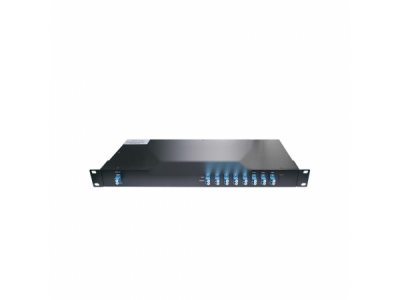
Recently, Guangdong Lightwit Photonics Technology Co., Ltd. (hereinafter referred to as "Lightwit Photonics") announced that its independently developed OCS (Optical Circuit Switch) equipment has been successfully developed and is now capable of large-scale mass production, with mass production preparations underway. This milestone marks Lightwit Photonics' critical leap from R&D to industrialization in the field of core optical communication components, breaking through relevant technology market barriers, injecting new vitality into China's optical communication industry and AI computing network development, and demonstrating the innovation capability and industrialization strength of a national enterprise in the high-end optoelectronic instrument sector.
OCS, or Optical Circuit Switch, is one of the core devices in optical communications. Its fundamental principle involves directly switching optical signals in the optical domain without undergoing "optical-to-electrical-to-optical" (O-E-O) conversion, reconstructing physical paths through an optical switch matrix to achieve end-to-end optical connections. It is widely used in AI data centers, high-performance computing, optical fiber communication networks, and other critical fields, serving as one of the core solutions to address the bandwidth, latency, and power consumption bottlenecks faced by current electronic switching. With the rapid iteration of AI technology, large-scale computing clusters have increasingly urgent requirements for low latency, high energy efficiency, and high bandwidth. The mass production and large-scale deployment of OCS equipment have become key drivers for industry upgrading, with broad market prospects. Backed by mature MEMS micromirror array processing, precision assembly, and quality control technologies, the foundation for large-scale OCS mass production is solid, enabling rapid response to downstream market demands.
As a technology enterprise focused on optical fiber communication devices, smart sensor R&D, and comprehensive solution provision, Lightwit Photonics has consistently adhered to the core philosophy of "innovation empowering development" since its establishment. The company closely monitors industry technology frontiers, focuses on "chokepoint" technology challenges in the optoelectronics field, continuously increases R&D investment, builds professional R&D teams, and simultaneously improves its mass production support system, laying a solid foundation for OCS equipment from R&D to mass production. The successful development and mass production breakthrough of OCS equipment is the result of the company's R&D team's long-term technical research, repeated testing and optimization, while balancing mass production feasibility and cost control — embodying Lightwit Photonics' deep expertise and industrialization practice in optoelectronic technology.
According to reports, the OCS equipment developed by Lightwit Photonics employs advanced MEMS micromirror array technology and integrates multiple core detection and switching modules, offering four major advantages: First, ultra-low latency — eliminating the O-E-O conversion delay of traditional electronic switching, achieving nanosecond-level switching latency, three orders of magnitude lower than traditional electronic switching, which can significantly improve the collaborative efficiency of AI computing clusters and effectively reduce computing resource waste in ten-thousand-GPU clusters. Second, high energy efficiency — port power consumption reduced by over 60% compared to electronic switches of equivalent bandwidth, substantially lowering data center operating costs and supporting green, low-carbon development goals. Third, ultra-wideband potential — natively supporting WDM technology, enabling linear bandwidth scaling without additional fiber deployment, meeting large-scale data transmission requirements. Fourth, high reliability — featuring modular design with redundant power supplies and intelligent monitoring systems, minimizing potential downtime, suitable for demanding industrial-grade application scenarios.
During the R&D and mass production preparation process, a dedicated team of core R&D personnel and engineers at Lightwit Photonics not only focused on key aspects including core components, optical path design, and intelligent control of OCS equipment — overcoming multiple technical challenges such as precision micromirror array control, low-loss optical path integration, and intelligent scheduling algorithms — but also prioritized optimizing mass production processes, solving core issues in large-scale production such as precision assembly and yield control. After hundreds of iterative testing and optimization cycles, the team established a proprietary core technology system and mature mass production process scheme. Relevant technical indicators have reached industry-leading levels, fully meeting the application requirements of domestic AI data centers and high-end optical communication networks, with certain performance metrics exceeding comparable imported products. This effectively breaks the monopoly of imported equipment in this field and provides strong assurance for mass production delivery.
A representative from Lightwit Photonics stated that the successful development and mass production capability of OCS equipment represent the company's important achievement in implementing an innovation-driven development strategy and advancing the commercialization of scientific and technological achievements. It also serves as a concentrated demonstration of the company's technological strength and industrialization capability. Currently, the global optical communication industry and AI computing networks are entering a period of rapid development, and OCS, as a core supporting device, continues to see rising market demand. The realization of OCS mass production not only fills the company's product gap in this field but also helps China gain core initiative in optical circuit switching, driving the optoelectronics industry toward high-end, self-reliant, and large-scale development, providing downstream industries with stable and reliable domestically produced equipment.
Looking ahead, Lightwit Photonics will take the OCS mass production milestone as an opportunity to continue deepening technological innovation, further optimizing product performance and mass production processes, expanding production capacity, accelerating the industrial application and market promotion of OCS equipment, and expanding the application boundaries of OCS products in AI data centers, high-end manufacturing, telecommunications carriers, and other fields. Simultaneously, the company will continue to increase R&D investment, deepen industry-academia-research collaborative innovation, focus on tackling core technologies in the optoelectronics field, continuously improve its product matrix, strengthen supply chain stability, and strive to build an internationally competitive innovative technology enterprise, contributing Lightwit's strength to the high-quality development of China's optical communication industry and the realization of technological self-reliance.






 Follow us
 +86-755-81488131
 sales@lightwit.com.cn